Top 5 In-Demand programming languages to learn in 2020
In-depth analysis and ranking of the top programming languages for job seekers and new developers.
1. Python


When Guido van Rossum developed Python in the 1990s as his side project, nobody has thought it would be the most popular programming language one day. Considering all well-recognized rankings and industry trends, I put Python as the number one programming language overall.
Python has not seen a meteoric rise in popularity like Java or C/C++. Also, Python is not a disruptive programming language. But from the very beginning, Python has focused on developer experience and tried to lower the barrier to programming so that school kids can also write production-grade code.
In 2008, Python went through a massive overhaul and improvement with the cost of introducing significant breaking changes by introducing Python 3.
Today, Python is omnipresent and used in many areas of software development, with no sign of slowing down.
3 Key Features:
- The USP of Python is its language design. It is highly productive, elegant, simple, yet powerful. Python has set the gold standard in terms of developer experience and heavily influenced modern languages like Go, Julia.
- Python has first-class integration with C/C++ and can seamlessly offload the CPU heavy tasks to C/C++. Also, Python gives powerful toolset for Mathematics, Statistics, and Computational Science with various libraries like NumPy, Pandas, SciPy, Scikit-Learn. As a result, Python dominates the Machine Learning/Deep Learning/Data Science landscape and other Scientific domain.
- Python has a very active community and support. You can always find enough Python libraries and frameworks, no matter whether you are working on Enterprise Applications, Data Science, or Artificial Intelligence.
Popularity:
In the last several years, Python has seen enormous growth in demand with no sign of slowing down. The programming language ranking site PYPL has ranked Python as the number one programming language with a considerable popularity gain in 2019:


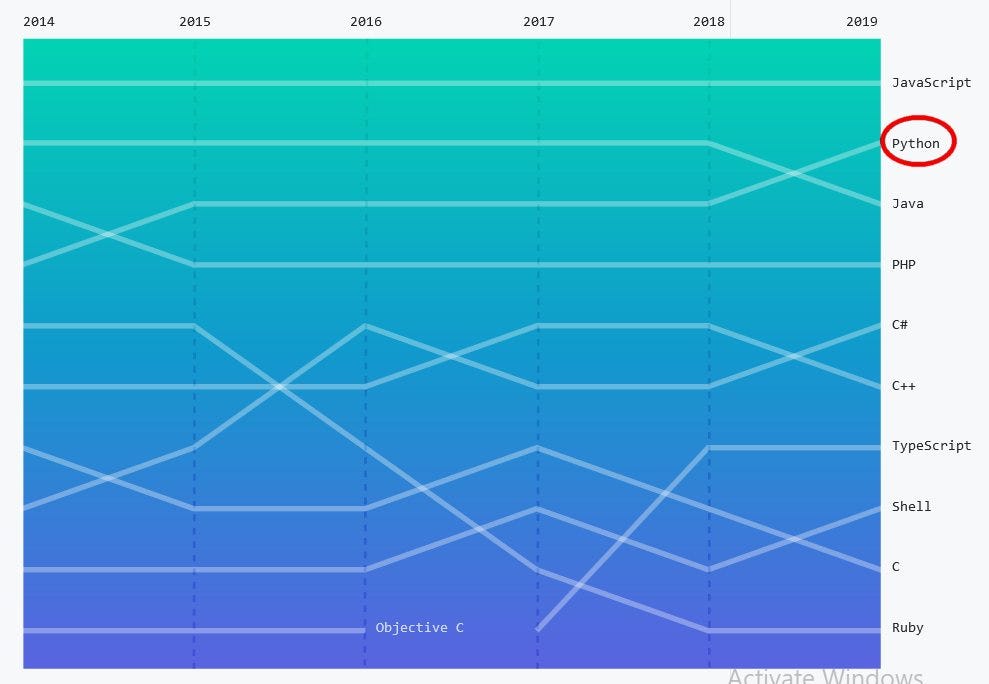
Also, Python has surpassed Java and became the 2nd most popular language according to GitHub repositories contributions:

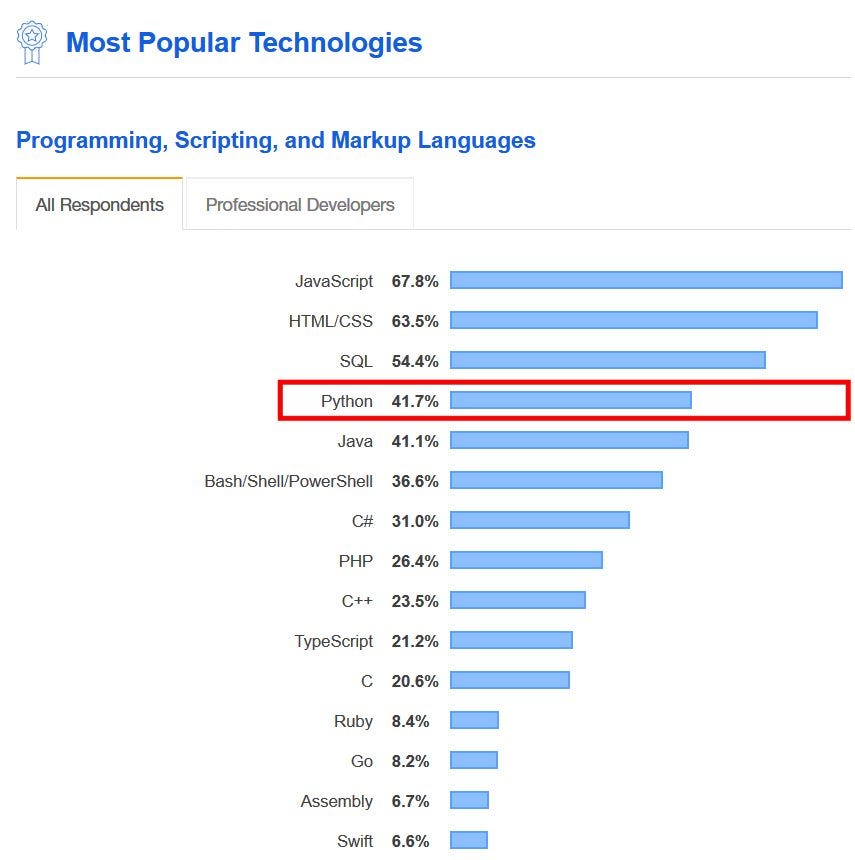
Also, StackOverflow developer survey has ranked Python as the 2nd most popular programming language (4th most popular Technology):

Another programming language ranking site TIOBE has ranked Python the 3rd most popular language with a massive gain in last year:


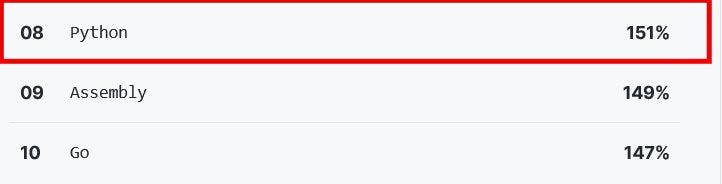
Python still has the chance to go further up in ranking this year as Python saw a 50% growth last year according to GitHub Octoverse:

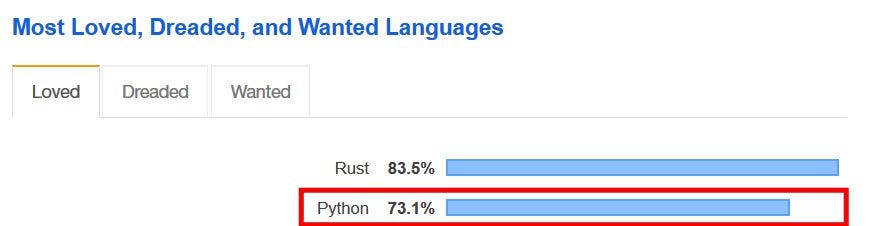
StackOverflow developer survey has listed Python as the second most loved programming language:

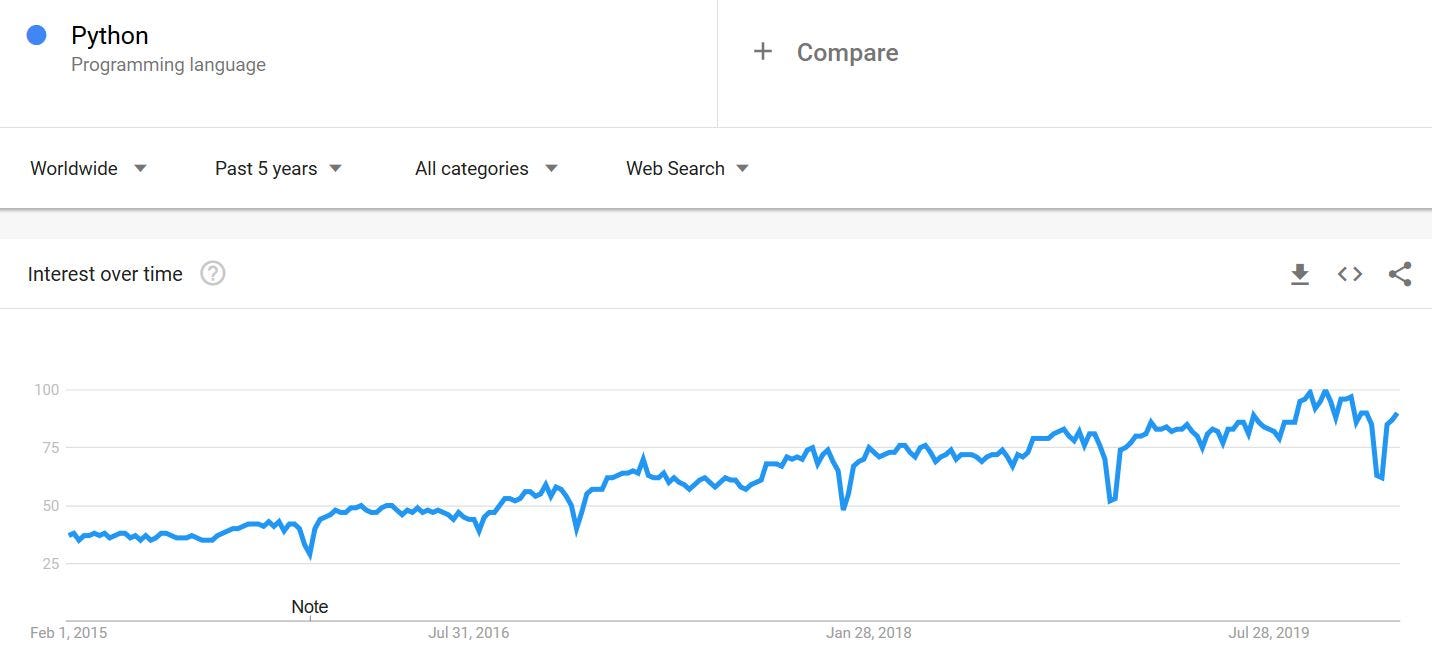
Most of the older and mainstream programming languages have stable or downward traction. Also, Python is an exception here and has an increasingly upward trending during the last five years as clear from Google trends:

Job Market:
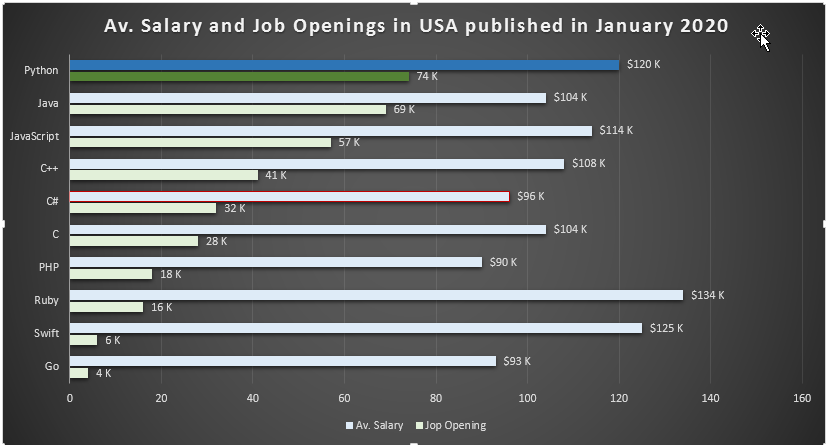
According to Indeed, Python is the most demanding programming language in the USA job market with the highest 74 K job posting in January 2020. Also, Python ranked third with a $120 K yearly salary.

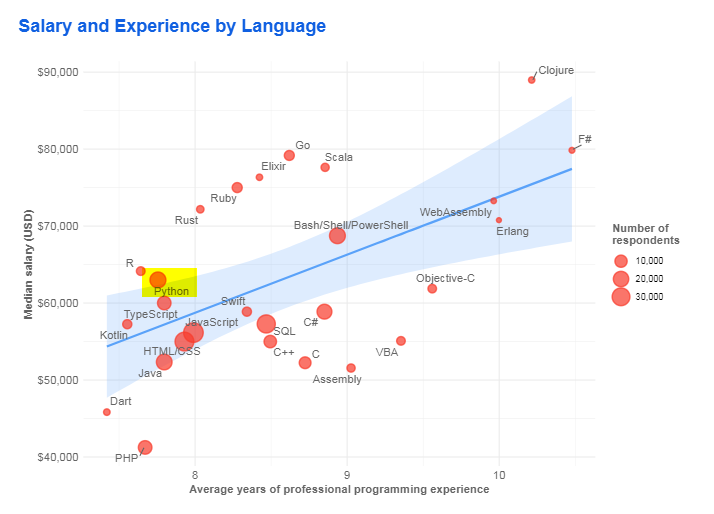
Also, StackOverflow developer survey has shown that Python developers earn a high salary with relatively low experience compared to other mainstream programming languages:

Main Use Cases:
- Data Science
- Data Analytics
- Artificial Intelligence, Deep Learning
- Enterprise Application
- Web Development
2. JavaScript

During the first browser war, Netscape had assigned Brendan Eich to develop a new programming language for its Browser. Brendan Eich had developed the initial prototype in only ten days, and the rest is history. Software developers often ridiculed JavaScript in its early days because of its poor language design and lack of features.
Over the years, JavaScript has evolved into a multi-paradigm, high-level, dynamic programming language. The first significant breakthrough of JavaScript came in 2009 when Ryan Dahl has released cross-platform JavaScript runtime Node.js and enabled JavaScript to run on Server Side.
The other enormous breakthrough of JavaScript came around 2010 when Google has released a JavaScript based Web development framework AngularJS.
Today, JavaScript is one of the most widely used programming languages in the world and runs on virtually everywhere: Browsers, Servers, Mobile Devices, Cloud, Containers, Micro-controllers.
3 Key Features:
- JavaScript is the undisputed king in Browser programming. Today, Web development is dominated mainly by JavaScript based SPA frameworks like React, Vue.js, Angular.
- Thanks to Node.js, JavaScript offers event-driven programming, which is especially suitable for I/O heavy tasks. Today, JavaScript and Node.js run on almost all Platforms, including Servers and Mobile devices.
- JavaScript has gone through massive modernization and overhaul in the last several years, especially in 2015, 2016, and later. The major JavaScript releases like ES5, ES6 has added many modern features, and JavaScript of today is entirely different from JavaScript of the last decade.
Popularity:
JavaScript is one of the most top-ranked programming languages because of its ubiquitous use in all platforms and mass adoption.
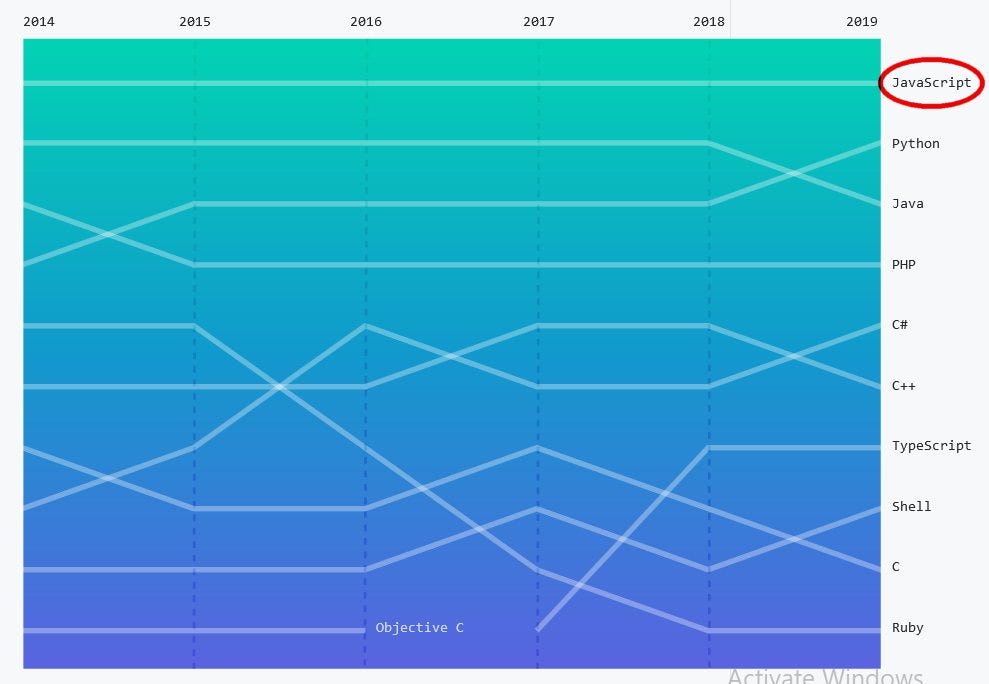
Octoverse has put JavaScript as the number one programming language for five consecutive years by GitHub repositories contributions:

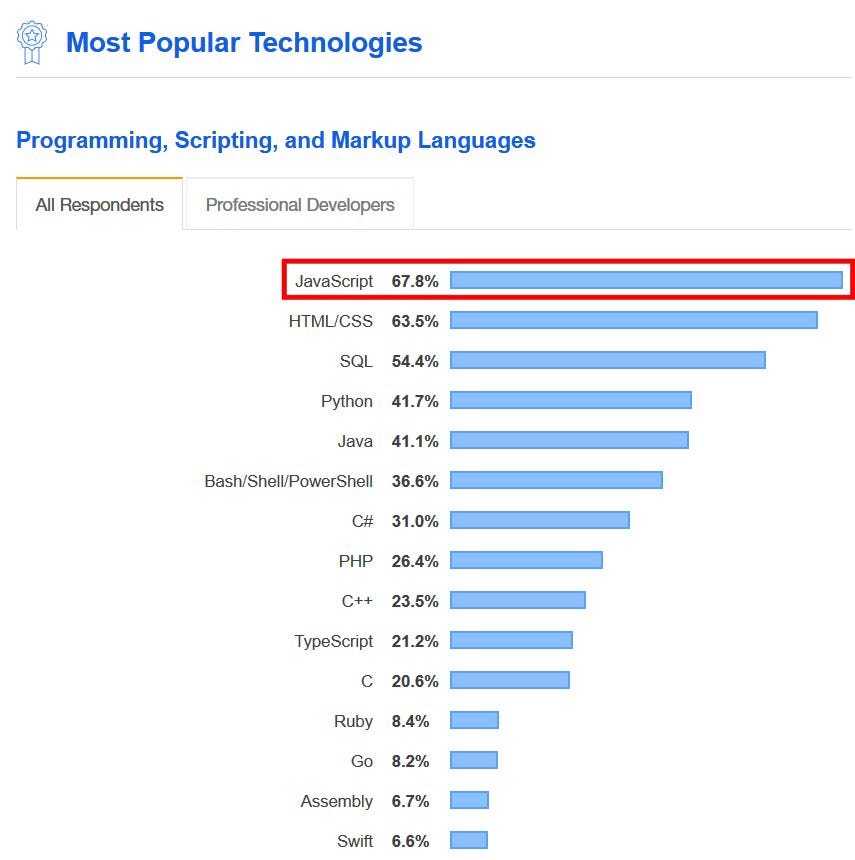
Also, StackOverflow developer survey 2019 has ranked JavaScript as the most popular programming language and Technology:

Another programming language popularity site PYPL has ranked JavaScript as the 3rd most popular programming language:


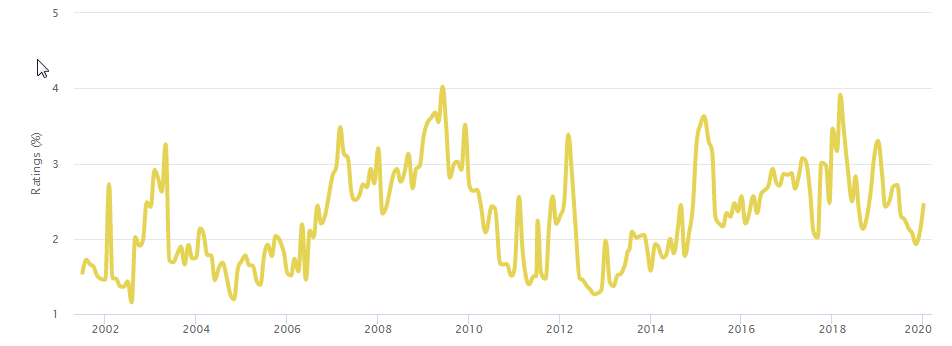
The programming language popularity site TIOBE has ranked JavaScript as the 7th most popular programming language:

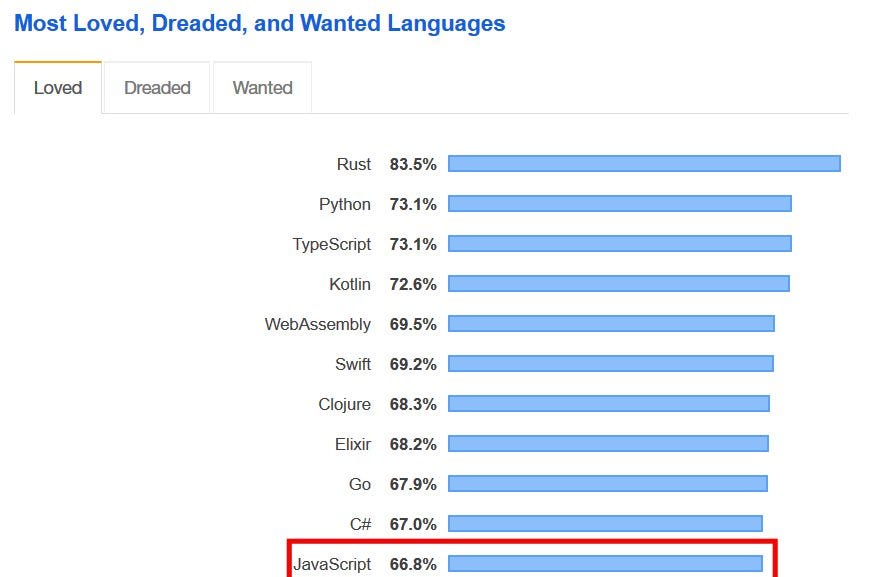
Once dreaded by the developers, JavaScript also ranked as the 11th most loved programming language according to StackOverflow Developer survey:

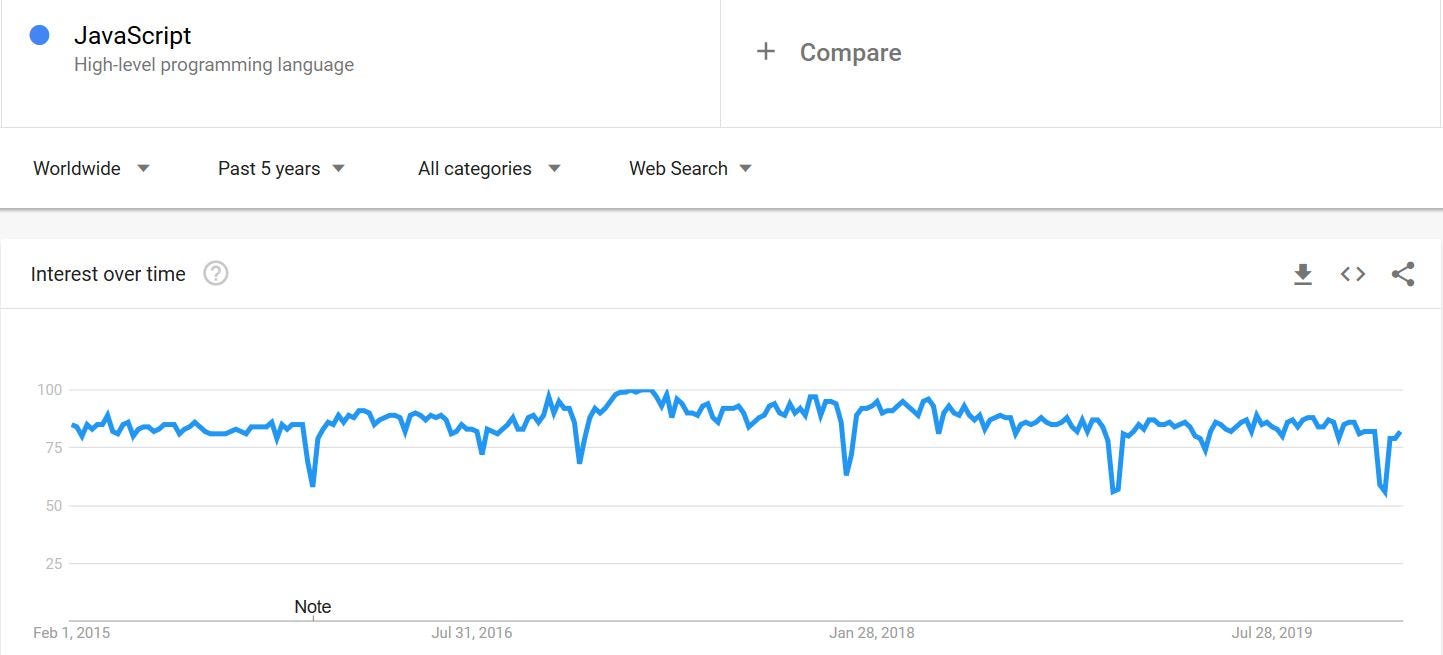
The trending of JavaScript is relatively stable, as shown by Google Trends:

Job Market:
In the USA Job market, Indeed has ranked JavaScript as the third most demanding programming language with 57 K Job posting in January 2020. With $114 K average yearly salary, JavaScript ranks 4th in terms of salary:


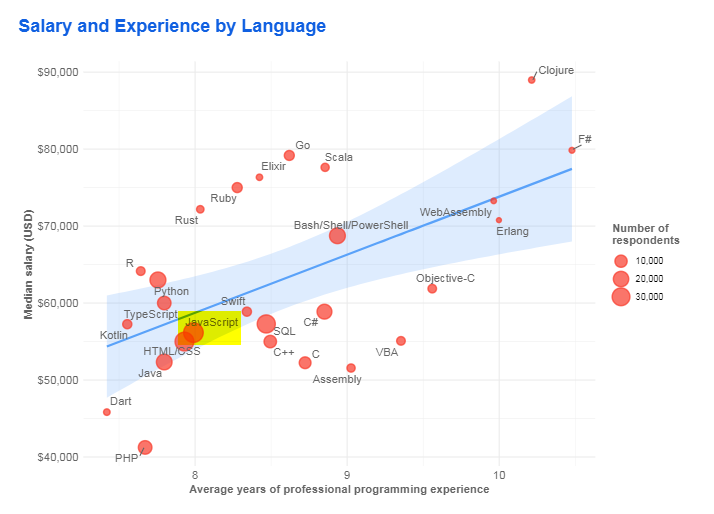
Also, StackOverflow developer survey has shown that JavaScript developers can earn a modest salary with relatively low experience:

Main Use Cases:
- Web Development
- Backend Development
- Mobile App Development
- Serverless Computing
- Browser Game Development
3. Java

Java is one of the most disruptive programming languages to date. Back in the ’90s, business applications were mainly developed using C++, which was quite complicated and platform dependent. James Gosling and his team in Sun lowered the barrier to develop business applications by offering a much simpler, object-oriented, interpreted programming language that also supports Multi-threading programming.
Java has achieved Platform independence by developing Java Virtual Machine (JVM), which abstracted the low-level Operating System from developers and gave the first “Write Once, Run anywhere” programming language. Also, JVM offered generation garbage collection, which manages the Object life cycle.
In recent years, Java has lost some of its markets to highly developer-friendly modern languages and the rise of other languages, especially Python, JavaScript. Also, JVM is not quite Cloud friendly because of its bulky size. Oracle has recently introduced hefty licensing fees for JDK, which will dent Java’s popularity further.
Fortunately, Java is working on its shortcomings and trying to make Java fit for Cloud via the GraalVM initiative. Also, in OpenJDK, there is a free alternative to the proprietary Oracle JDK.
Java is still the number one programming language for enterprises.
3 Key Features:
- Java offers a powerful, feature-rich, multi-paradigm, interpreted programming language with a moderate learning curve and high developer productivity.
- Java is strictly backward compatible, which is a crucial requirement for business applications. Java has never introduced a major breaking change like Python or Scala. As a result, it is still the number one choice for enterprises.
- Java’s runtime JVM is a masterpiece of Software Engineering and one of the best virtual machines in the industry. With 25 years of innovation and engineering craftsmanship, JVM offers high performance and features to Java. Also, JVM provides some advanced Garbage Collection to Java.
Popularity:
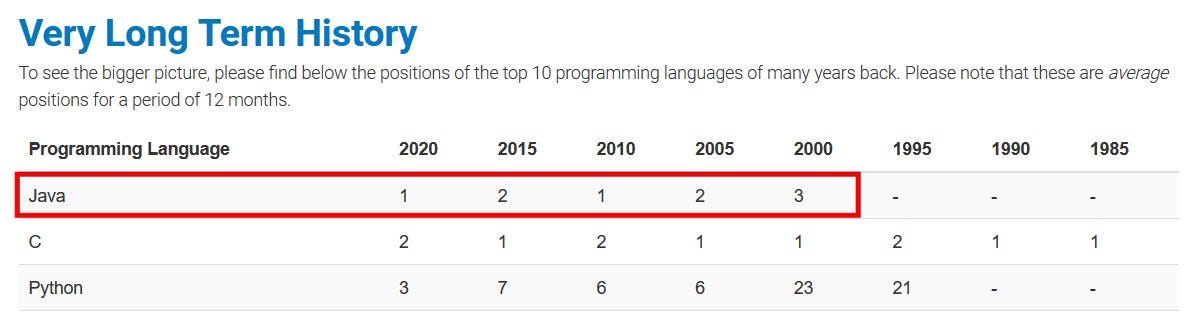
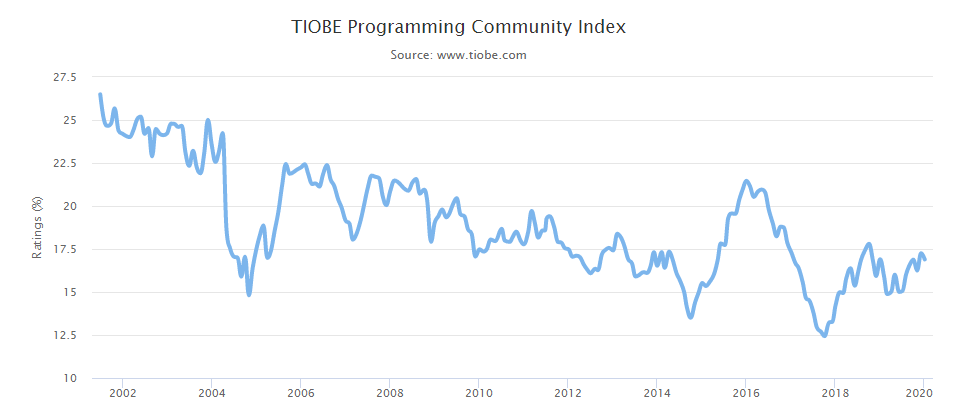
Only after five years of its release, Java becomes the 3rd most popular programming language and always remained in the top 3 lists in the next two decades. Here is the long-term history of Java in the popular TIOBE ranking:

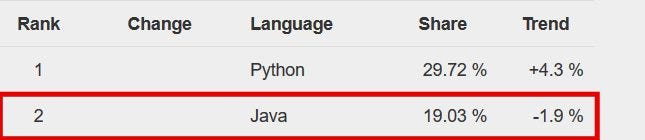
Java’s popularity has waned in the last few years, but it is still the most popular programming language, according to TIOBE, as shown below:



According to the GitHub repository contribution, Java was in the number one spot during the 2014–2018 and only slipped to number 3rd position in last year:


The other popular programming language ranking website PYPL has ranked Java as 2nd most popular programming language:

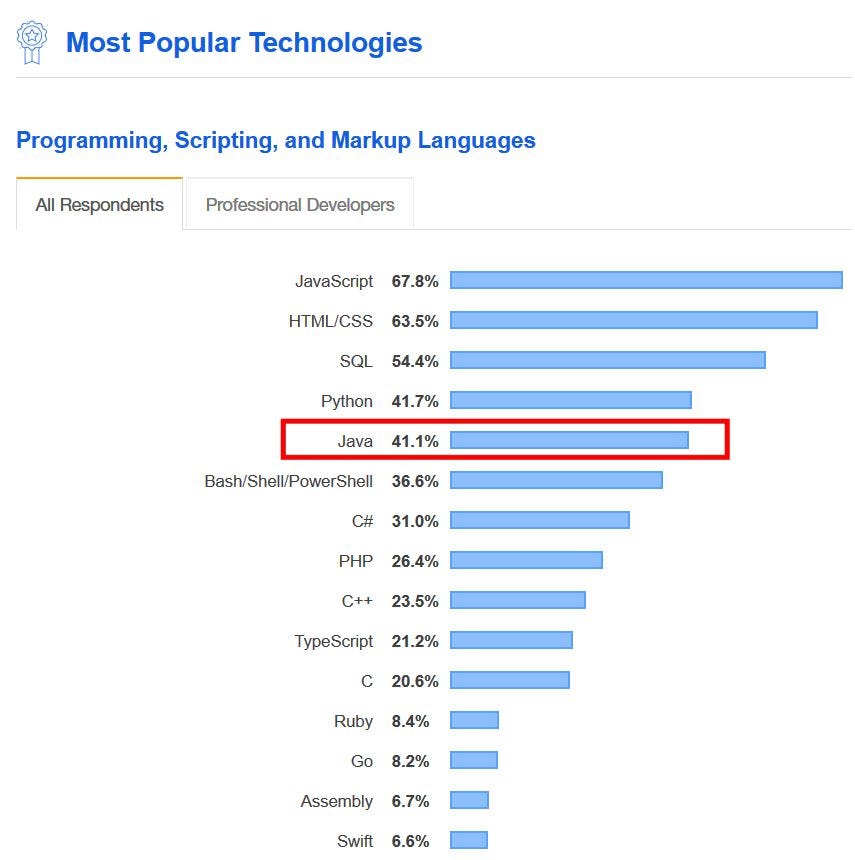
StackOverflow developer survey also ranked Java high and only superseded by JavaScript and Python programming languages:

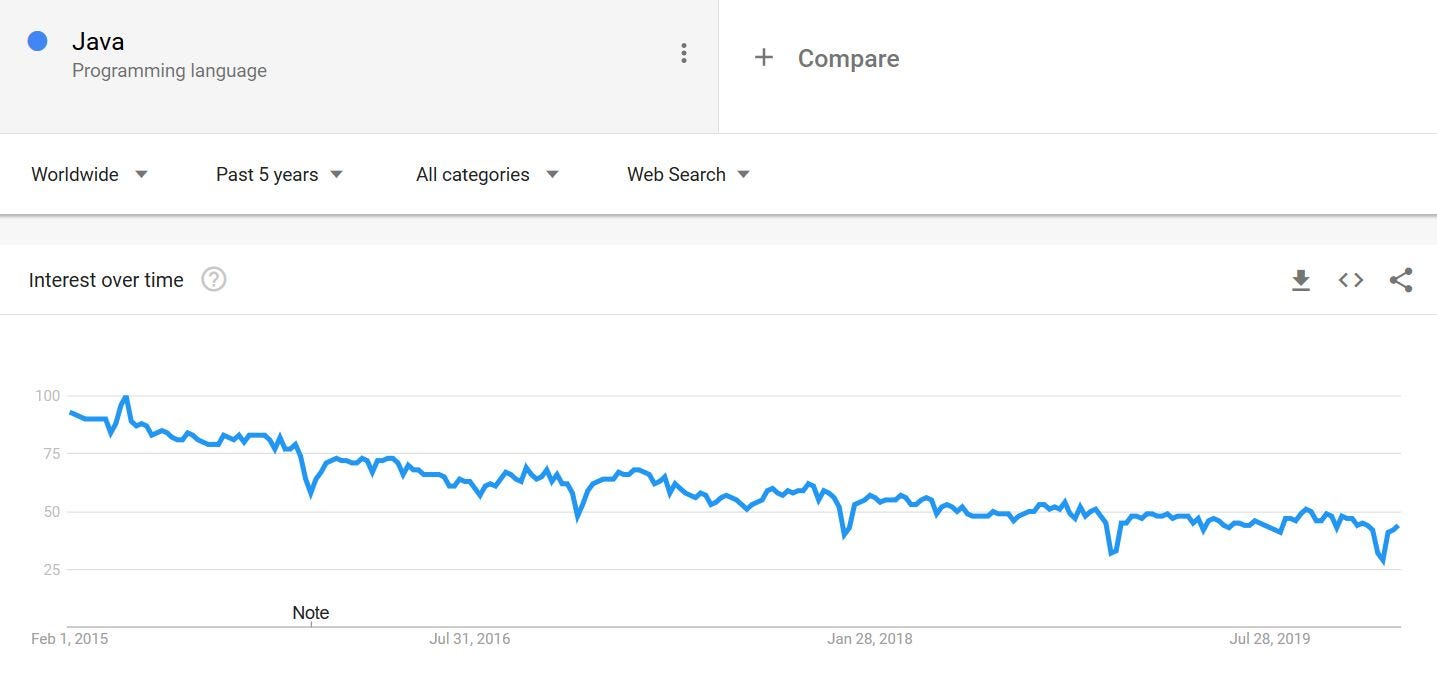
According to Google trends, Java is losing its traction constantly in the past five years:

Job Market:
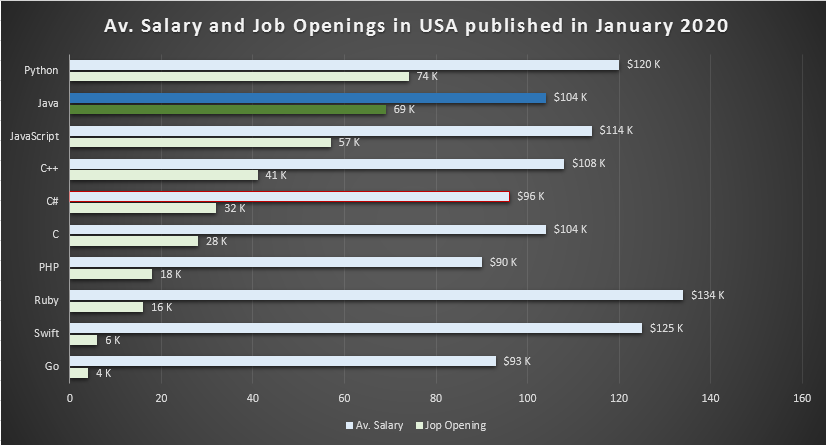
According to Indeed, Java is the second most demanding programming language in the USA with 69 K Job posting in January 2020. Also, Java developers earn the 6th highest annual salary ($104 K):

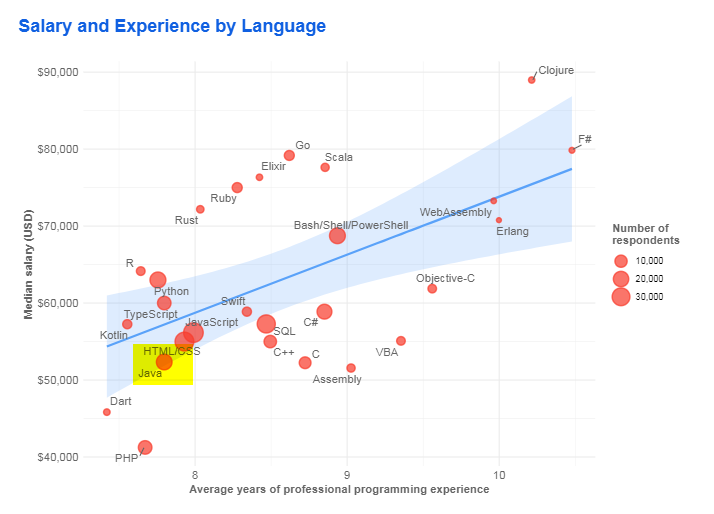
As per StackOverflow Developers survey 2019, Java offers a modest salary after few years of experience:

Main Use Cases:
- Enterprise Application Development
- Android App Development
- Big Data
- Web Development
4. C#

In 2000, Tech giant Microsoft decided to create their Object Oriented C like programming language C# as part of their .NET initiative, which will be managed (run on a Virtual Machine like Java). The veteran language designer Anders Hejlsberg designed C# as part of Microsoft’s Common Language Initiative (CLI) platform where many other (mainly Microsoft’s languages) compiled into an intermediate format which runs on a Runtime named Common Language Runtime (CLR).
During the early days, C# was criticized as an imitation of Java. But later, both of the languages diverged. Also, Microsoft’s licensing of C# compiler/runtime is not always clear. Although Microsoft is currently not enforcing its patents under the Microsoft Open Specification Project, it may change.
Today, C# is a multi-paradigm programming language that is widely used not only on the Windows platform but also on the iOS/Android platform (thanks to Xamarin) and Linux platform.
3 Key Features:
- Anders Hejlsberg did an excellent job to bring C# out of Java’s shadow and give its own identity. In terms of developer experience, C# is ahead of Java.
- Backed by Microsoft and being in the industry for 20 years, C# has large ecosystems of libraries and frameworks. The ASP.NET is used for Web Development, especially on Windows.
- Like Java, C# is also platform independent (thanks to CLR) and runs on Windows, Linux, Mobile devices.
Popularity:
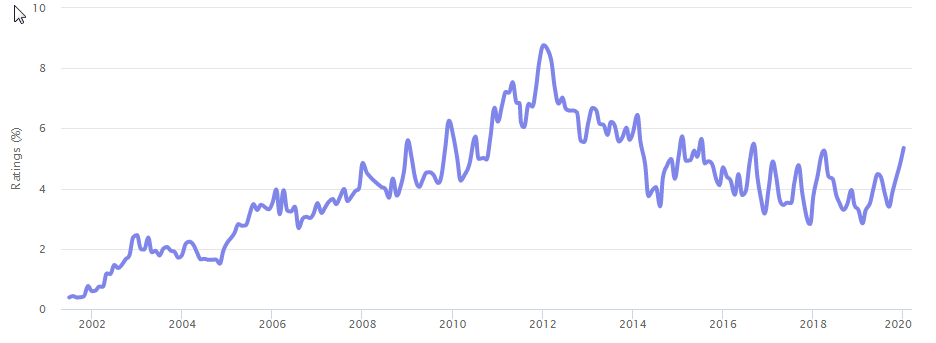
The popular language ranking site TIOBE has ranked 5th in January 2020 with huge gain:

Also, Octoverse has listed C# as the 5th popular programming language by GitHub repositories contribution:


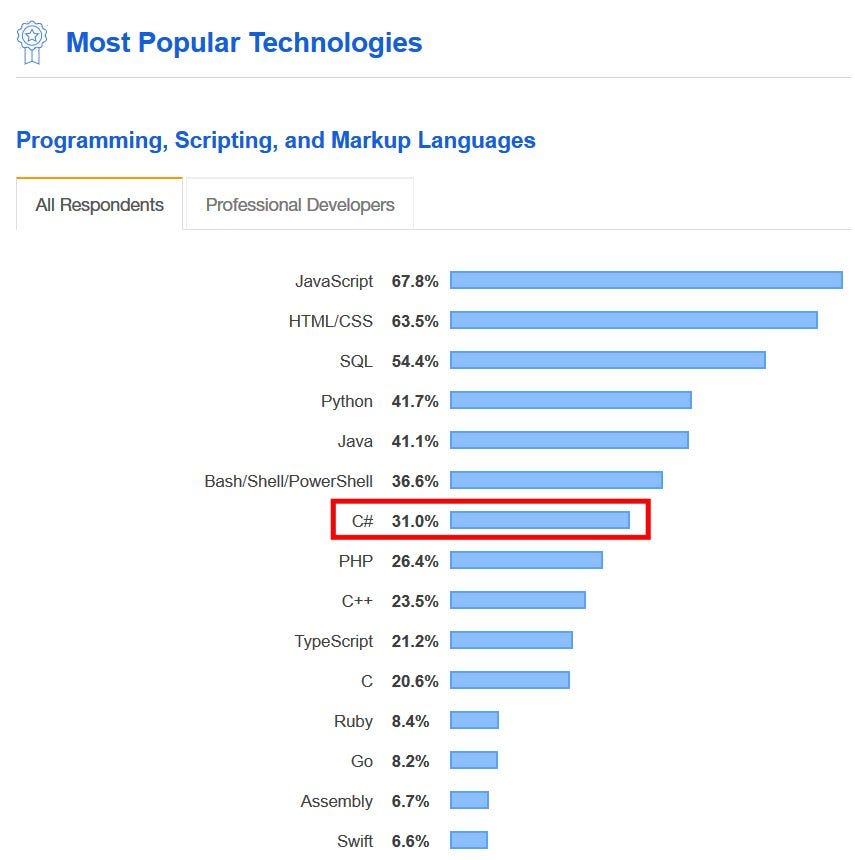
StackOverflow developer survey has placed C# as the 4th most popular language (7th most popular Technology for 2019:

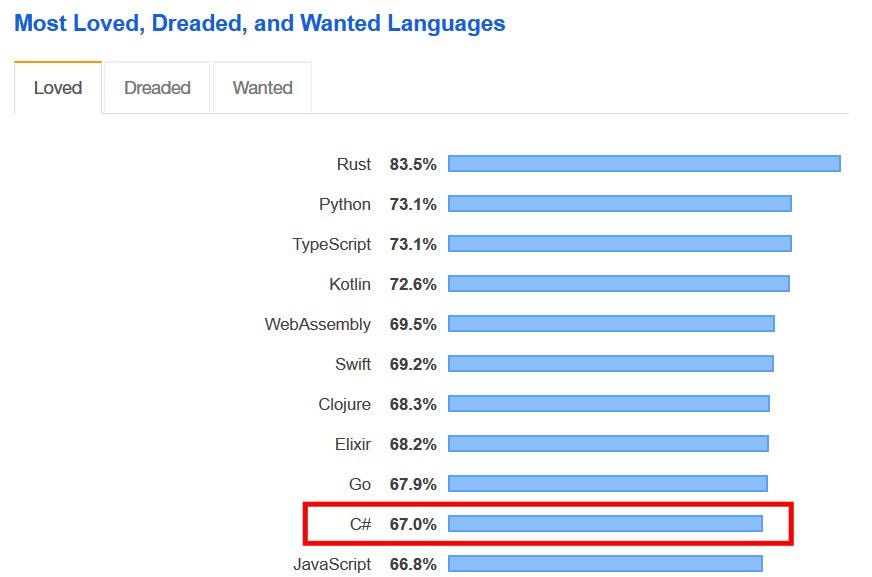
It is interesting to note that StackOverflow developer survey has ranked C# as the 10th most loved programming language (well above Java):

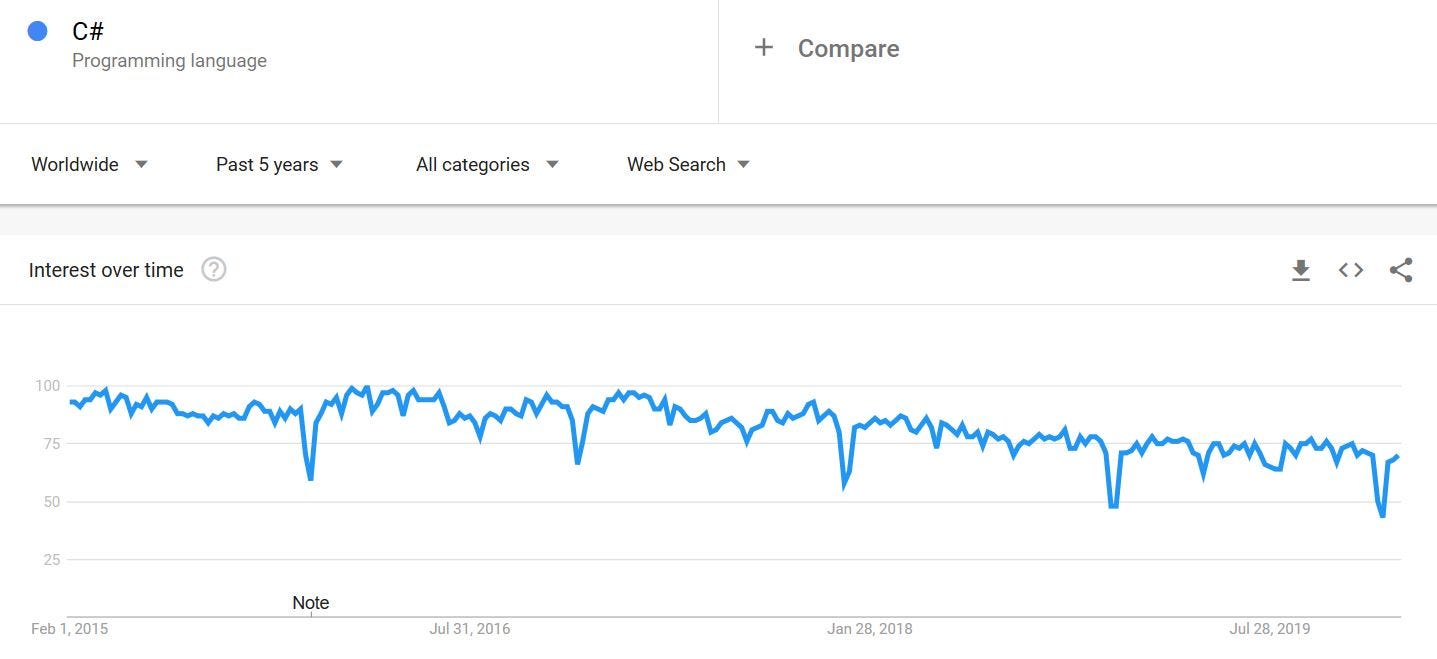
As clear from Google trends, C# is not being much hyped in the last few years, as shown below:

Job Market:
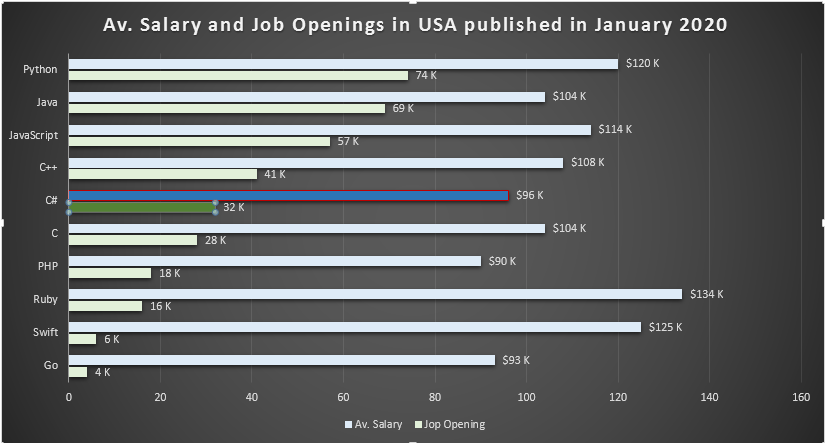
Indeed has posted 32 K openings for C# developers in the USA, which makes C# the 5th most demanding programming language in this list. With an annual salary of $96 K, C# ranks 8th in this list:

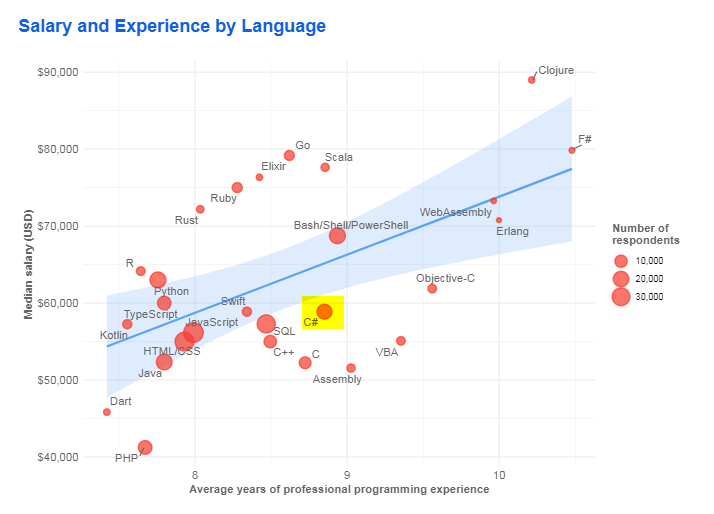
StackOverflow developer survey has placed C# above Java (albeit with more experience) in terms of global average salary:

Main Use Cases:
- Server-Side programming
- App development
- Web Development
- Game Development
- Software for Windows Platform
![]()
![]() 5. C
5. C


During the 1960s and 1970s, every cycle of the CPU and every byte of memory was expensive. Dennis Ritchie, a Bell lab engineer, has developed a procedural, general-purpose programming language that is compiled directly to machine language during the 1969–1973. C programming offers low-level access to memory and gives full control over the underlying hardware.
Over the years, C became one of the most used programming languages. Besides, C is arguably the most disruptive and influential programming language in history and has influenced almost all other languages on this list.
Although C is often criticized for its accidental complexity, unsafe programming, and lack of features. Also, C is platform-dependent, i.e., C code is not portable. But if you want to make the most use of your hardware, then C/C++ or Rust is your only option.
3 Main Features:
- As C gave low-level access to memory and compiled to Machine instructions, it is one of the fastest and most powerful programming languages.
- C gives full control over the underlying hardware. C program can run on every platform and take advantage of every kind of hardware, whether it is GPU, TPU, Container, Cloud, Mobile devices, or Microcontroller.
- C is one of the “Programming languages of the Language,” i.e., compilers of many other programming languages like Ruby, PHP, Python have been written in C.
Popularity:
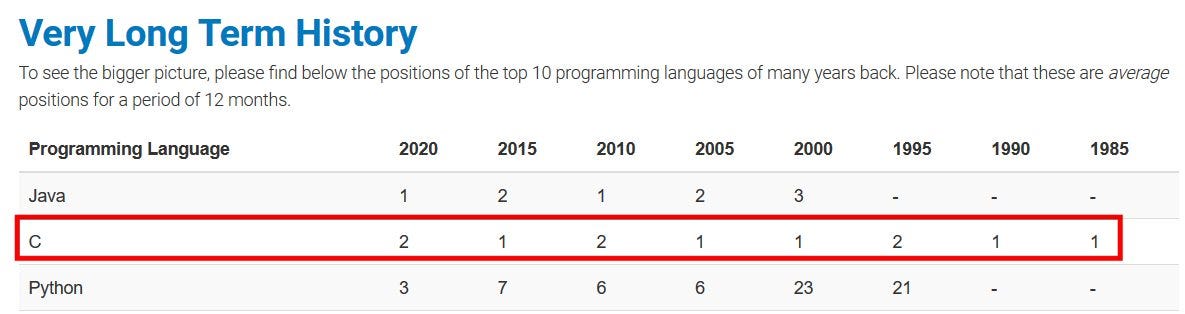
C is the oldest programming language in this list and has dominated the industry for 47 years. C has also ruled the programming language popularity ranking more than any other language as clear from TIOBE’s long-term ranking history:

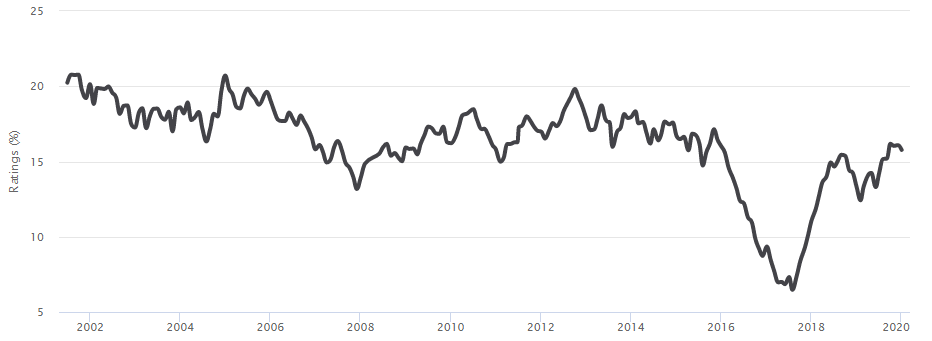
According to TIOBE ranking, C is the second most popular language with a huge popularity gain in 2019:



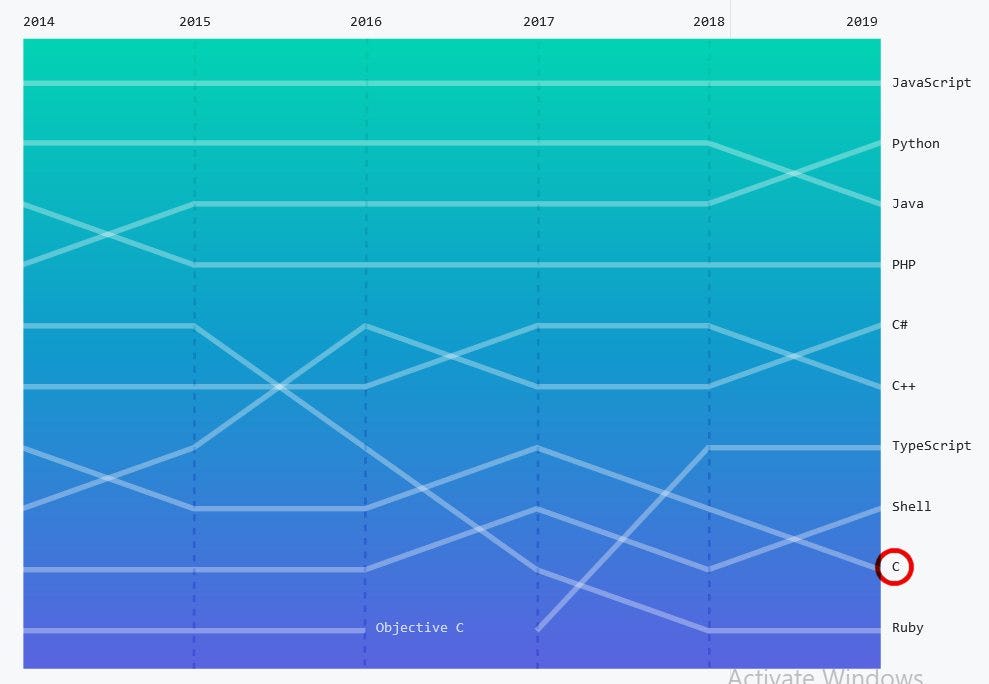
Octoverse has also ranked C as the 9th most popular language according to the GitHub repository contribution:

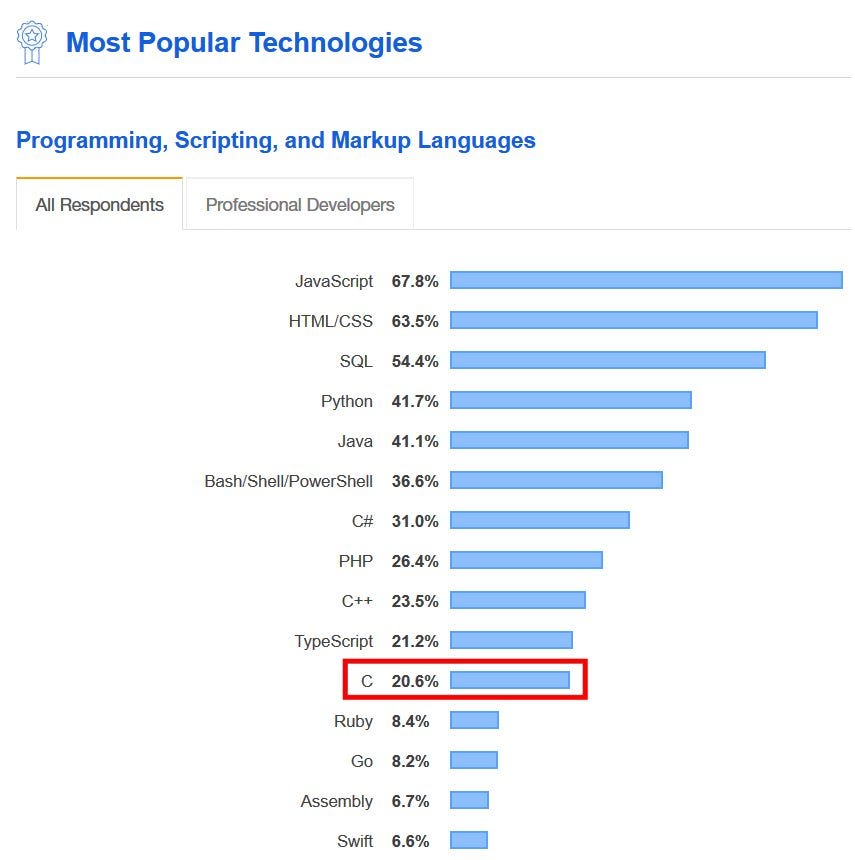
StackOverflow developer survey has also ranked C in 12th (8th considering programming language) place:

Google trending also shows a relatively stable interest in C over the last five years.


Job Market:
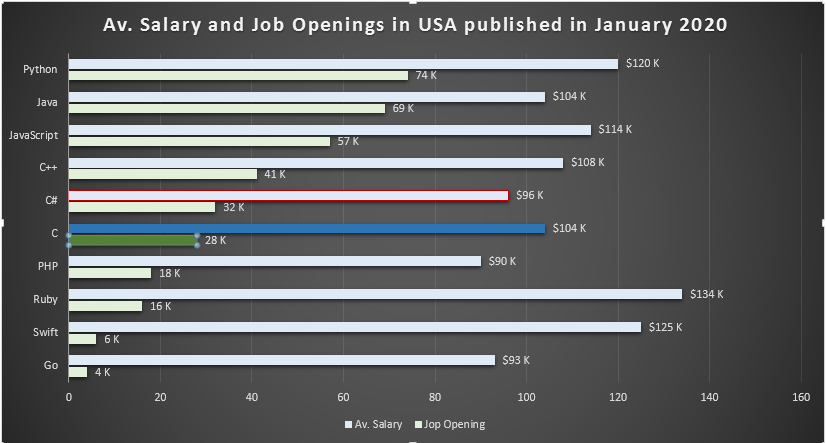
According to Indeed, there are 28K job postings for C developers in the USA, which make C the 6th most demanding programming language. In terms of salary, C ranks 6th with Java ($104 K):

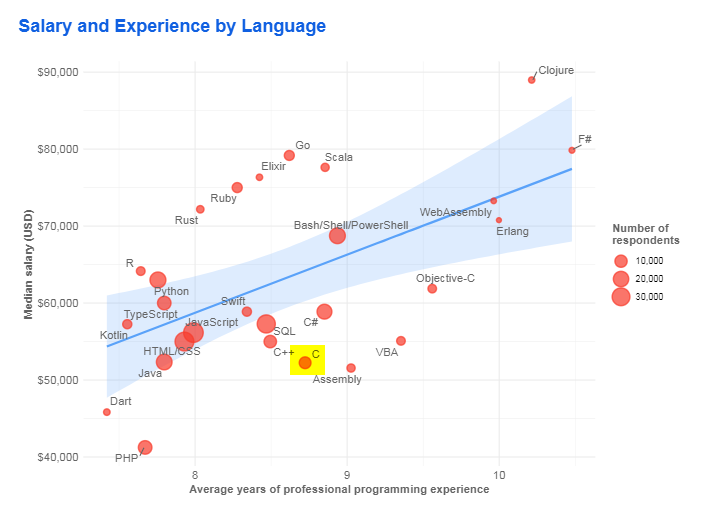
StackOverflow developer survey showed C developers can earn an average wage but needs a longer time to achieve that compared to, e.g., Java, Python:

Main Use Cases:
- System Programming
- Game Development
- IoT and Real-Time Systems
- Machine Learning, Deep Learning
- Embedded Systems


Comments
Post a Comment